Publication
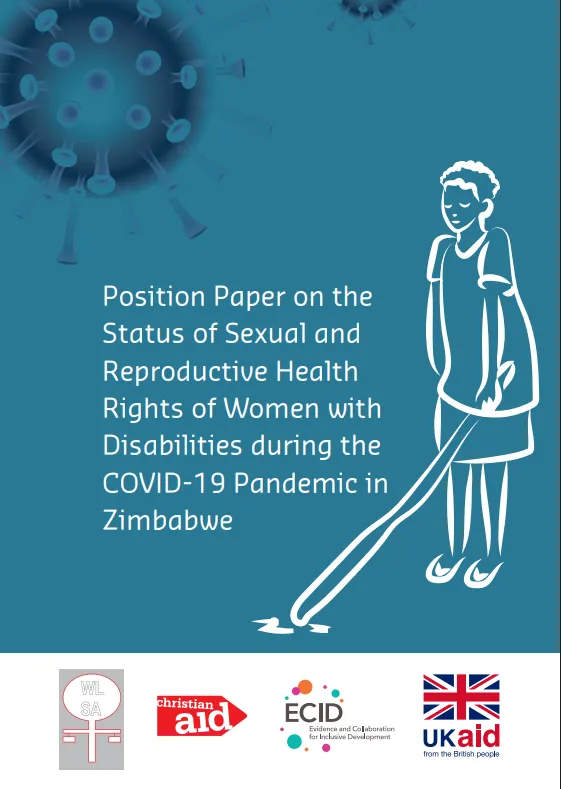
Position Paper on the Status of Sexual and Reproductive Health Rights of Women with Disabilities during the COVID-19 Pandemic in Zimbabwe
Abstract / Summary
Examines how Zimbabwe's COVID-19 containment measures affected the sexual and reproductive health rights of women with disabilities. Drawing on a WLSA/DWI study in urban and rural Mutare, it applies the ICESCR right-to-health framework (availability, accessibility, acceptability, quality) to document lived realities and barriers, concluding that pandemic policies were largely 'disability-blind'. (Also issued as the A5 booklet '2163 WLSA SRHR Women with Disabilities'.)
Key Findings
- Rural health centres are under-equipped and transport for referrals is scarce; urban buses lack wheelchair access.
- Income loss and drug/contraceptive shortages left women unable to afford contraceptives, sanitary wear and sunscreen.
- Digital information platforms and mask rules excluded women without smartphones and deaf women who lip-read.
- Health staff are untrained to serve patients with disabilities and no state interpreters exist for deaf women.
Recommendations
- Make contraceptives and sanitary wear freely available at all public health institutions as an essential service.
- Provide accessible transport and rural ambulances.
- Establish safety nets and a community disability database for crises.
- Provide SRHR information in accessible formats and train health staff, including interpreters for deaf women.