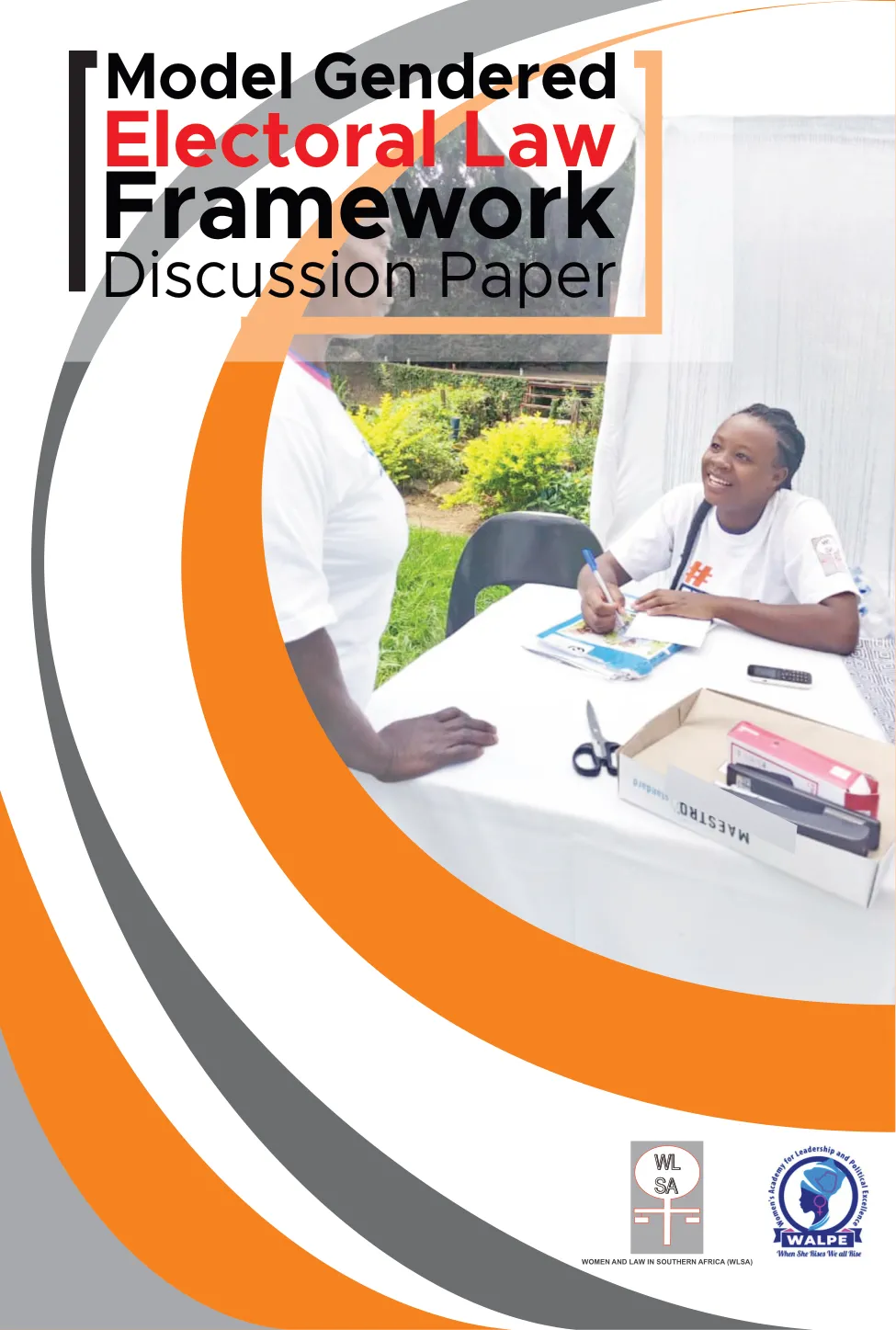
Model Gender Responsive Electoral Law Framework: Discussion Paper
Abstract / Summary
Presents a non-binding model framework to guide gender-responsive electoral law reform in Zimbabwe, motivated by the SADC Model Law on Elections and grounded in section 56 of the Constitution, CEDAW and SADC benchmarks. Covers gender mainstreaming across the full electoral cycle.
Key Findings
· Women face structural, socio-economic and psychological barriers to participation.
· Existing electoral law lacks systematic gender mainstreaming.
· Electoral management bodies lack gender-balanced staffing.
· Gender-based political violence and stereotypes persist.
· Zimbabwe has unmet obligations to domesticate international standards into law.
Recommendations
· Enact mandatory 50/50 candidate quotas across all tiers of government.
· Require a permanently gender-balanced electoral management body with gender training.
· Task the EMB with eliminating gender-based political violence.
· Adopt gender-responsive electoral systems, delimitation, registration and voter education.
· Introduce a gender-sensitive media code of conduct.