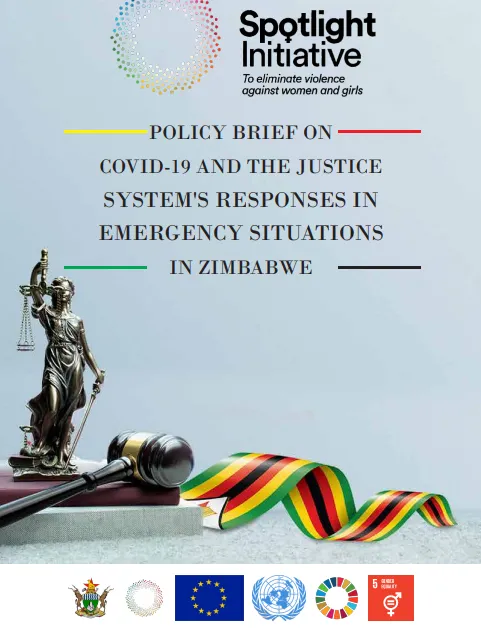
Policy Brief on COVID-19 and the Justice System's Responses in Emergency Situations in Zimbabwe
Abstract / Summary
This policy brief examines access to justice for survivors of sexual and gender-based violence (SGBV), harmful practices (HP), and violations of sexual and reproductive health rights (SRHR) during the COVID-19 pandemic in Zimbabwe. Using desktop research methodology, it analyses how COVID-19 lockdown regulations — including Statutory Instruments and Judicial Practice Directions — affected the ability of vulnerable groups, particularly women and children, to access formal and informal justice systems. The brief finds that the pandemic exposed deep structural weaknesses in Zimbabwe's justice delivery system and disproportionately affected women, who constitute the majority of SGBV survivors. It draws lessons from Zimbabwe's lockdown experience and comparator jurisdictions, and concludes with detailed calls to action for both government and civil society.
Key Findings
- The COVID-19 Regulations failed to classify legal services as essential, preventing lawyers, legal aid providers, and litigants from moving freely during lockdown.
- Informal/customary courts — the most accessible justice institutions for rural women — were completely suspended, with no Practice Direction issued to govern their operations.
- Zimbabwe recorded a 60% increase in GBV calls on the national hotline between March and October 2020, with women comprising 94% of those reporting and approximately 90% of cases being intimate partner violence.
- Civil and family court matters — including protection orders, maintenance, and custody — were suspended during the initial lockdown, leaving domestic violence survivors without their preferred remedy.
- The COVID-19 Preparedness Plan lacked a gendered perspective and was silent on the impact of the pandemic on women's political, economic, and social participation.
- Requirements for clearance letters, high transport costs, and reduced court operating hours further compounded barriers to justice for rural and low-income women.
Recommendations
- Acknowledge access to justice as an essential service during emergencies, including issuing Practice Directions for informal courts.
- Clearly define urgent cases to include domestic violence, SGBV, HP, custody, and maintenance matters.
- Repeal discriminatory laws that fuel violence against women and girls.
- Replace the Civil Protection Act with a comprehensive statute addressing access to justice across all phases of emergencies.
- Introduce e-filing, virtual court sittings, and electronic case management systems in all courts.
- Decentralise legal aid services to district and community levels.
- Invest in community paralegal models, particularly for remote and marginalised communities.
- Develop simplified legal literacy materials in local languages, Braille, and accessible formats.